Knowing About China Tourist Visa for Indians - A Complete Guide for 2026
Published August 27, 2026
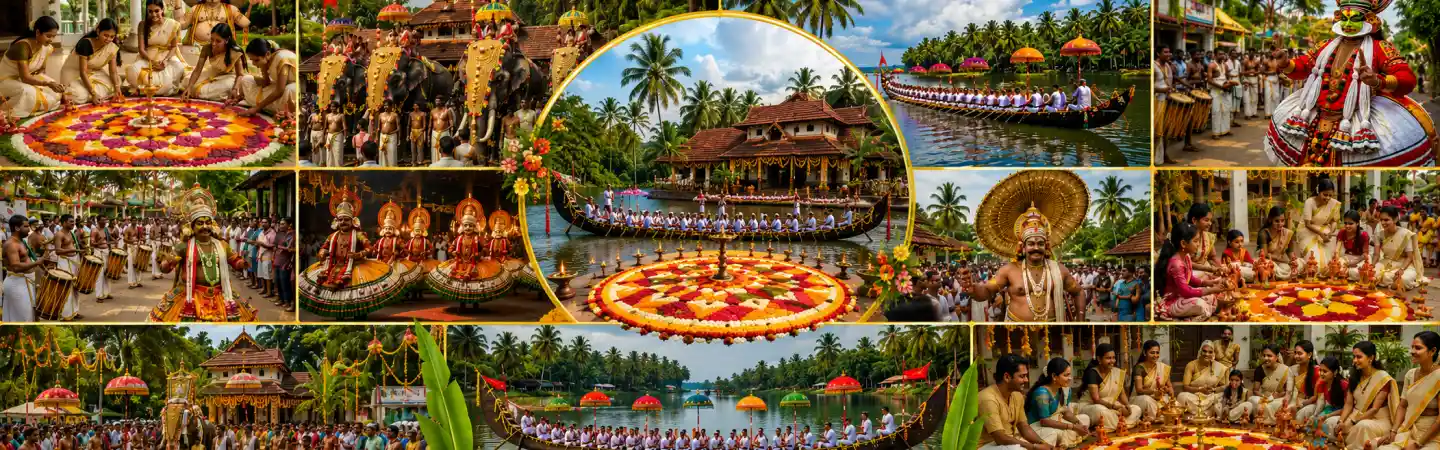
Whenever we think about Kerala, we only imagine the beautiful scenic views, backwaters, lush greenery, and those aromatic spices. But in the month of August to September, the whole state sort of flips into this vibrant vibe of the Onam festival, like everything suddenly feels alive, right away. This festival brings happiness, hospitality, and a certain kind of joy in the state. From the flower carpets to the boat races & traditional feasts, your soul will be refreshed with the unforgettable experience of this festival. This festival is also known as the ‘Harvest Festival of India’. It marks the annual visit of the king ‘Mahabali’ who was the ancient ruler of Kerala. Onam gives hope and the opportunity to reconnect with friends and family. So, through this blog, let’s dive into this beautiful festival and know everything about it.
Onam is considered one of the biggest festivals of Kerala. It depicts the story of the demon Mahabali. Instead of acting like a demon, he was very kind and honorable. At the time of his reign, Kerala reached the height of its popularity. Seeing his fame and popularity, it becomes a great concern for the other Devtas. They turned to seek help from Lord Vishnu. Then he took the ‘Vamana Avtar’ and appeared in front of the Mahabali. Then the Brahmin Avtar Vishnu Ji demanded three pieces of land of his choice from the king.
Then, ‘Mahabali,’ being a kind-hearted king, agrees to fulfill his wish. Then the brahmin took 2 big steps forward that covered the earth and the heaven. The king was pleased to see this miracle. So then, at the very end step, he offered his head to lord Vishnu . When this was seen god blessed him with immortality, and also let him return back to his own homeland. That’s why, on this auspicious time, Onam was celebrated, like a welcoming return of King Mahabali to his native place.
Onam is celebrated in the Malayalam month of Chingam, which normally shows up around August or September, kind of depending. The festival usually runs for 10 days, begins with Atham, then kind of moves forward, and it ends on Thiruvonam. For this year, the Onam 2026 dates in Kerala start on 16th August and they wrap up on 26th August. These dates get decided based on the Malayalam calendar, so it’s not really random or something. This festival brings the festive vibe and engraves a happy image in the mind.
This festival is celebrated for almost 10 days in Kerala, each day having its own beauty and tradition. Below are the details given:
This day marks the start of this festival with the huge Athachamayam procession in Kochi. All the families create beautiful and simple Pookkalam (rangoli) with the yellow flowers. The Atham basically marks the homecoming of King Mahabali, and sets the festival mode across the whole of Kerala.
On this day, some layers of flowers are added to the traditional rangoli Pookkalam. All the people clean their houses, and decorate their house entrances with flowers, and visit the nearby temple for worship. Chithira marks the joy and enthusiasm of the festival among friends and family.
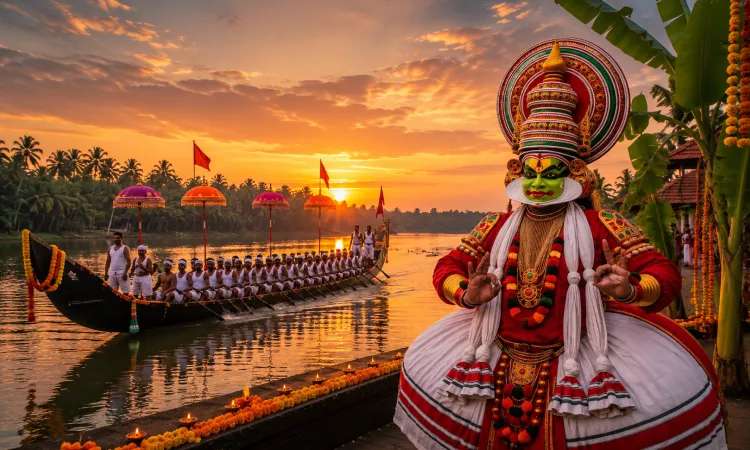
This day symbolizes the shopping day. Family members buy the new clothes called Onakkodi. Women put on the Kasavu dress, men wear the Mundu and children, are dressed in that traditional festive attire really. Pookkalam is laid out with extra little details showing off the joy and energy of the colors and the celebrations, like it is kinda telling a story without saying much, at all.
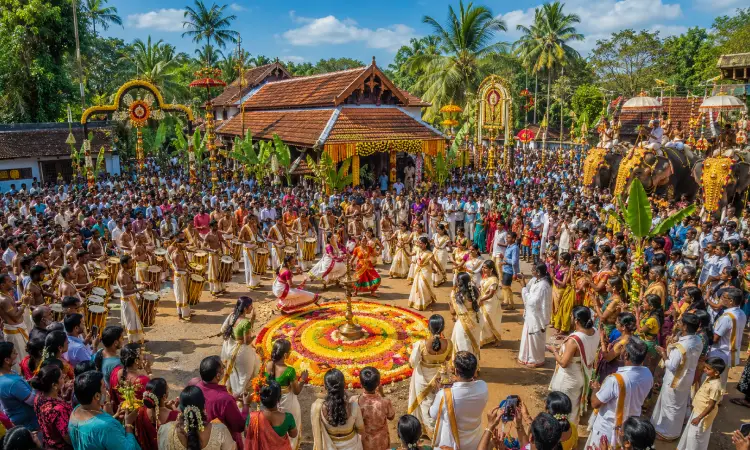
It is the most important day of the Onam festival. On this day, the cultural feast ‘Onasadhya’ is prepared. Families visit the markets to buy the fresh vegetables and spices to prepare this feast.
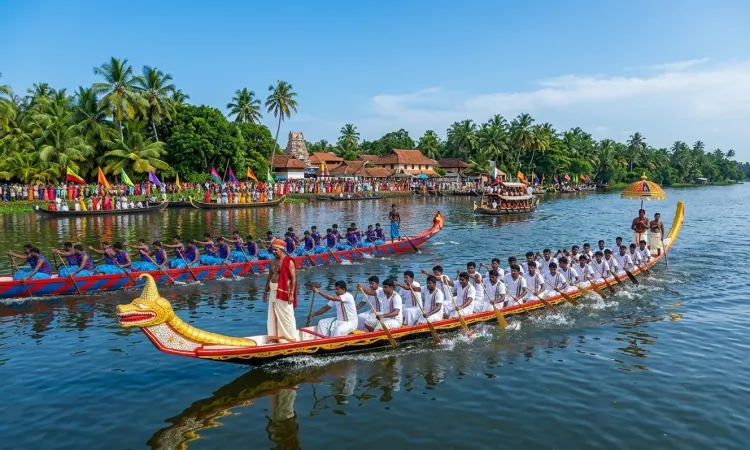
The fifth day of the festival is famous for the thrilling boat race activities. Some of those include Vallamkali, or the snake boat race on the Pamba river. The crowd roars with more excitement in the longboats. All the people are indulged in the friendly competition during the festival.
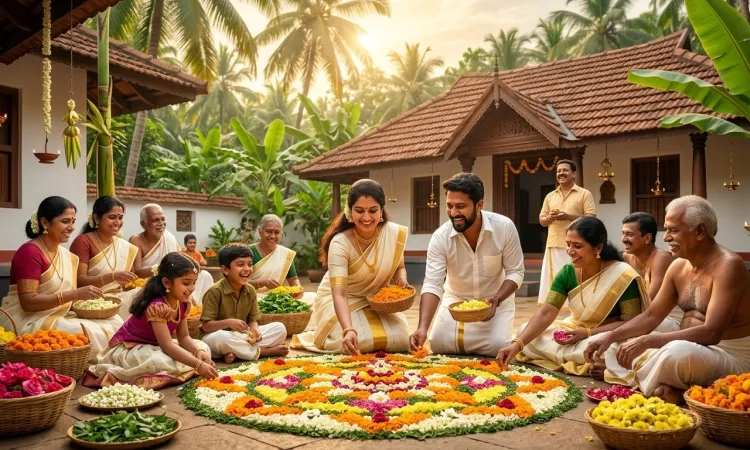
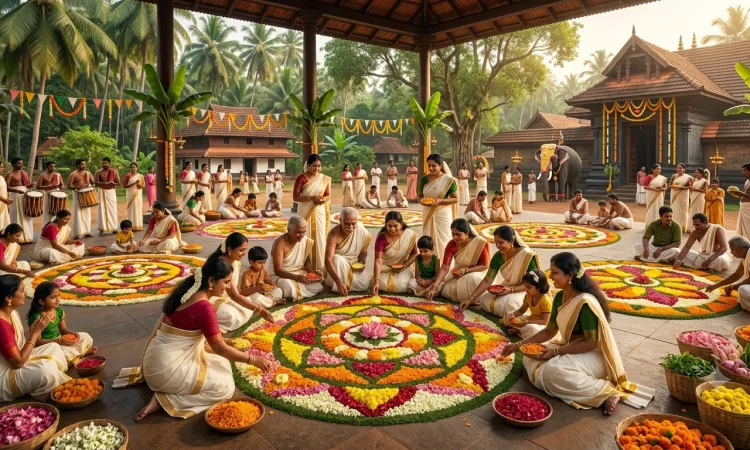
On this day, temples begin serving the Onasadhya as ‘Prashad’. Also, folk arts such as Pulikali, and the Kaikottikali fill the streets of the state with dance, music, and colors. It is the vibrant day on which travelers enjoy the most.
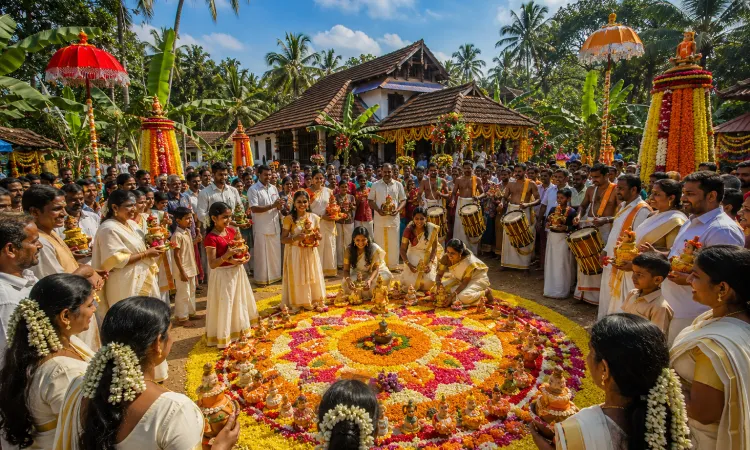
Pooradam is the time when the clay idols of King Mahabali and Vamana are placed at the center of the Pookkalam. It is performed to invite the king into the houses of each family. This day marks spirituality across the state.
It is the day when the king arrives in Kerala. On this day, families buy the fresh fruits & vegetables, clean their houses, and make all the final preparations. It is also known as the ‘First Onam’ day.
It is the last and most important day of the Onam festival. All the families enjoy this day by wearing the new clothes, completing their rangoli, and enjoying the grand Onasadhya together.
Below is the list of the famous activities performed at the time of the Onam festival:
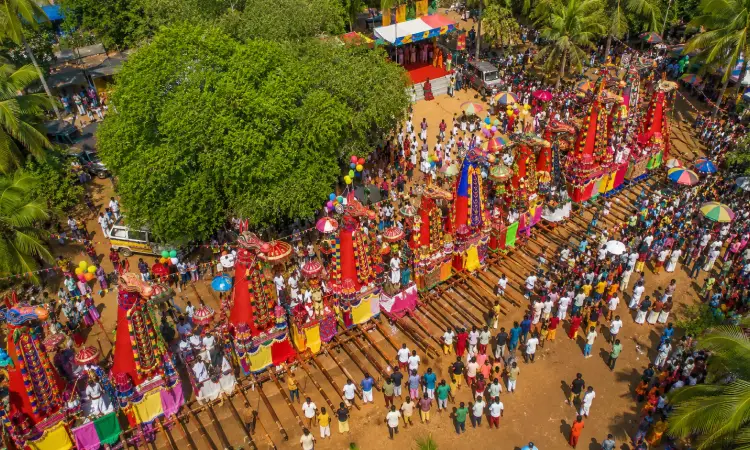
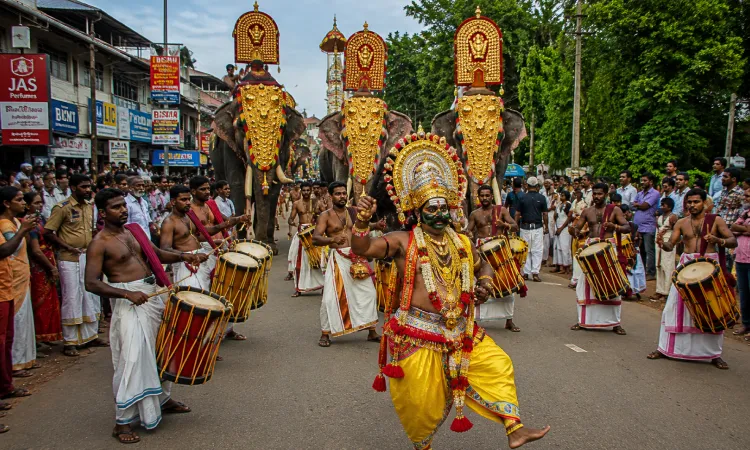
This day is celebrated as the first day of the Onam festival. All the families enjoy the royal fiesta, and begin their cultural spirituality at the royal town of Tripunithura. At Athachamayam, people witness the marching elephants, music, drum beats, and the traditional art forms, such as singing and dancing.
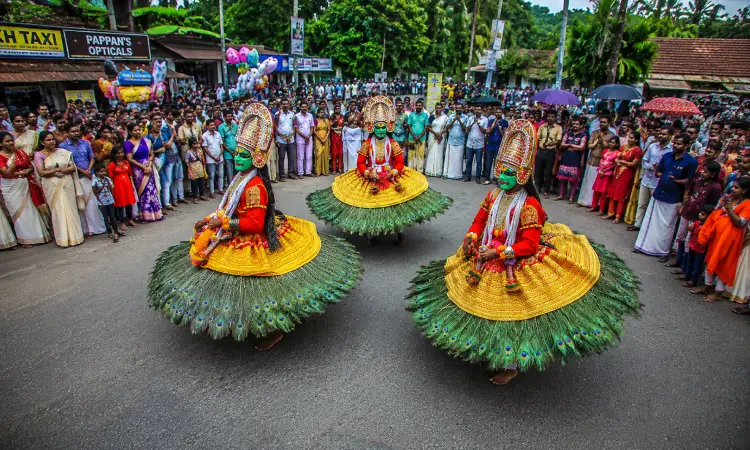
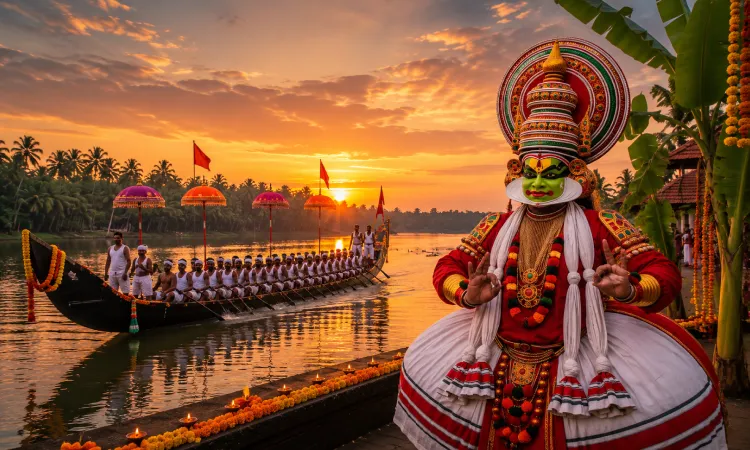
The Onam festival also features the real essence of Kerala. In this festival, Kathakali and Kummattikali types of dance are performed by professional dancers. In Kovalam, Shornur, and Cheruthuruthy, dance was performed at this auspicious occasion.
This is another famous dance form performed at the time of Onam. In this, women dance in the circle around the illuminating lamp in the traditional dress code.
It is a multi course meal with all kinds of vegetarian dishes, served on the last day of the festival like you know, the final day sort of thing. All the dishes are served on the banana leaves, and eaten during lunchtime. On this day, red or brown rice is made. Without this, the whole meal is incomplete.
Onam is the festival of joy. It is celebrated with a lot of dance and music. At this time, you can enjoy various traditional rituals, which are
Onakazcha is a real heartfelt tradition, where people give gifts, food, clothes, or money to temples, relatives and those in need during Onam. In a way it kinda shows the festival spirit , you know, kindness and gratitude. This thing also reminds everyone that real celebration is not just noise but sharing happiness, and making sure nobody is left out , even in this festive season.
Onam Harvest, kinda different part, but still tied in—this ritual celebrates Kerala’s rich agricultural legacy. It marks the successful gathering of crops after months of hard work. Farmers show respect to nature for a plentiful harvest, then they pray for prosperity in the coming year too. The freshly harvested produce is used to prepare the big Onam feast ,so the celebration feels connected to the land, not separated from it.
Kattappattu Kazhikkal, kind of traditional ritual that you’ll still see in some parts of Kerala , mainly in rural communities. In these families , people get ready and prepare special food, then they offer it while singing devotional folk songs. These songs sort of “call for” blessings for health, for prosperity, for that quiet harmony at home. It also feels like a small gathering moment, where family members come together and the local customs keep living on, you know ,and then later they pass these cultural habits to the next generation too.
Onavillu is one of those really beautifully decorated ceremonial bows that is traditionally offered to temples during the Onam festival. It’s made from wood, and it’s decorated with colorful paintings of Hindu deities and sacred signs. In a way it stands for devotion, prosperity, and cultural heritage, all mixed together. Even if it’s mostly linked with temples in southern Kerala, Onavillu still stays as an important artistic and spiritual mark for Onam celebrations. People treat it like more than just an object, it’s like a symbol that holds the festival together a bit.
Pulikali, which people also call the “Tiger Dance”, is kinda one of those most thrilling scenes in the festival, you know. The performers paint their bodies as tigers and hunters, then they just move and dance, super energetically to the beat of traditional drums as they pass through the streets. Travelers enjoy this game a lot.
Kummattikkali is another traditional folk dance, done by artists wearing beautifully carved wooden masks and vibrant costumes. The dancers go from house to house and they entertain families with music, dance, and small playful interactions that everyone seems to enjoy. This centuries old tradition is especially popular among children and it symbolizes joy, prosperity ,and the deeper cultural heritage of Kerala.
Onathallu is this traditional martial art inspired game that people celebrate in some parts of Kerala during the festival, sort of you know. The participants do friendly, hand-to-hand mock combat, always under the supervision of experienced elders. It’s not only like a competition either, it also brings forward courage, togetherness, discipline and that spirit of unity… while also keeping an important part of Kerala cultural traditions still alive.
It is this graceful, elegant kind of dance that women perform. They are dressed in the traditional outfit of Kerala. In it, women move in a circle around the ceremonial lamp while they sing folk songs and soft chants. The synchronized actions and steady rhythm feel so right, like happiness and harmony, togetherness, and devotion all at once. Also, it’s like a celebration of being together among families, neighbors, and wider communities.
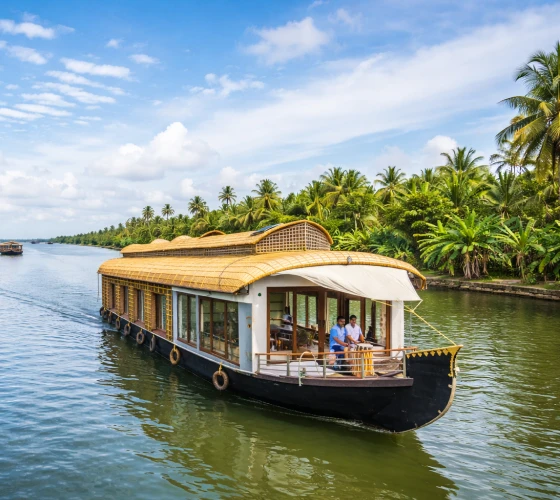
It is the prominent boat race of Kerala that is held every year during this festival. It takes place on the well-known Punnamada Lake of Alappuzha. It somehow pulls in thousands of spectators who show up just expecting something. Long, beautifully decorated snake boats drift across the water, while the rowers paddle along in a perfect rhythm, so the whole place feels buzzing. Like cheers and music and pure celebration are all knotted up together in one big tangle, and it just keeps going, every time.
Known as the oldest boat race in Kerala, the Champakulam boat race is tied up with the traditions of Onam, kind of so, you can feel it. It happens on the Pampa river, and is said to mark the deity’s passage, toward a nearby temple, almost like a quiet commemoration. Besides the exciting boat matches, the occasion also brings in lively cultural acts and the rhythmic performances, which makes the whole day a lovely mixture of devotion, history, and the festival mood, all at once.
The Kallada Boat race is a kind of the big attraction in Kerala, especially in the Kollam district, during the Onam celebrations. It happens on the calm waters of the Kallada river, and it really shows how incredible the teamwork is along with the steady endurance of those skilled rowers. There are festive surroundings everywhere, a lively crowd, and even the colorful celebrations, so the whole thing becomes a memorable experience not only for the locals but for the visitors too.
Held on the Pampa River, just around the Karuvatta in Alappuzha, the Karuvatta boat race is something people really hold close during Kerala’s Onam celebrations. It may be a bit smaller than the several other big race events across the state, yet it still carries a lot of local pride and somehow you can feel the tradition in every single heartbeat. The strokes are synced, the vibe keeps getting festive, and the crowd shouts with an eager attention kind of feel, so the whole event turns into this warm, genuine moment that reflects Kerala’s deep cultural legacy.
The 10th day of Onam, known as the Thiruvonam, is the biggest day of the celebration. On this day, it is said that King Mahabali will make a visit to his loyal subjects, in their homes. People get up really early, around 4:00 AM, to scrub and clean their houses, mutter the prayers, light lamps, and ready ‘Ata’, which is the sweet offering made from rice flour and molasses.
Also, many people shape small cone-like figures out of the clay, then paint them red. These shapes are usually embellished with the paste made from the rice flour, and they're put in the front courtyard as well as other corners inside the home. Some clay figures stand for the Hindu deities. After that, devotees carry out long, detailed prayers and rituals where offerings are made to the gods, as a sort of thanks for the harvest plenty and with hopes for continued blessings in the seasons that follow.
The Onam festival is celebrated in almost every city and town of Kerala, but some of the places in the state make your day more memorable. Below is the list of some best places to enjoy the Onam festival:
Related Post:
All the information we provide in our guides are totally verified. The travelers will get well-curated guides, minding all the topics a traveler should know. Planning is not just about the tickets its about the place its authenticity and its beauty and with our guide you can get a touch of that place and overall view of the trip.
Planning a trip should take place without any requirement to solve a puzzle. The platform My Vacation Vibes unites all elements that enable you to travel more efficiently throughout India and international destinations.
 Atham:
Chithira:
Chodhi:
Vishakam:
Anizham:
Thriketa:
Moolam:
Pooradam:
Uthradam:
Thiruvonam:
Atham:
Chithira:
Chodhi:
Vishakam:
Anizham:
Thriketa:
Moolam:
Pooradam:
Uthradam:
Thiruvonam:
Published August 27, 2026
Published June 30, 2026
Published May 12, 2026
Published August 10, 2026
Published June 16, 2026